
Spam Score Explained: What Is a Good Score and How Can You Lower It?

A website’s backlink profile can reveal a lot about its overall SEO health. While earning links from relevant and trustworthy websites can support organic visibility, links created through manipulative practices may create problems. This is why understanding SEO spam score is important when analysing a website’s backlink profile.
Website owners often notice their Spam Score while checking SEO metrics and wonder whether a high percentage means their website is being penalised by Google. Others want to know whether removing certain backlinks can improve their rankings or protect their website from future penalties.
However, Spam Score is not as straightforward as it may appear. It is a third-party metric that helps identify potential warning signs, not a direct measurement of Google’s trust in a website.
In this guide, we will explain what Spam Score means, how to check it, what is considered a good score, and which practical steps can help you investigate potential backlink issues.
What Is SEO Spam Score?
SEO Spam Score is a metric developed by Moz to estimate how similar a website’s characteristics are to websites that have previously been penalised or banned by Google.
It uses a machine learning model based on 27 features identified across millions of websites with a history of search penalties. These features include different website and domain characteristics that may be associated with spam-related behaviour.
The score is expressed as a percentage, ranging from 1% to 100%. A higher percentage indicates that the website shares more characteristics with websites identified in Moz’s penalised-site dataset.
However, this does not mean that a website with a high score is necessarily engaging in spam activities. The metric identifies correlations, not confirmed violations.
For example, a website might receive a higher score because of certain domain characteristics, even when its owner follows legitimate SEO practices.
Therefore, Spam Score should be used as an investigation tool rather than a final judgement of website quality.

What Is a Good Spam Score?
One of the most common questions about Spam Score is what percentage should be considered safe or healthy.
Moz divides its Spam Score into three categories to make the results easier to understand.
| Spam Score | Category | Interpretation |
| 1%–30% | Low | Fewer similarities with penalised websites |
| 31%–60% | Medium | Further investigation may be useful |
| 61%–100% | High | More similarities and a stronger need for investigation |
A lower score is generally preferable, but it does not guarantee that a website has no backlink-related problems.
Similarly, a medium or high score does not automatically indicate that Google has penalised a website.
Consider two websites. Website A has a 12% Spam Score but receives several suspicious links from irrelevant websites. Website B has a 42% Spam Score but has a natural backlink profile and no known policy violations.
In this situation, Website A may still require backlink investigation despite having a lower score.
The important thing is to understand what is contributing to the score instead of focusing only on the percentage.
How to Check Spam Score of a Website?
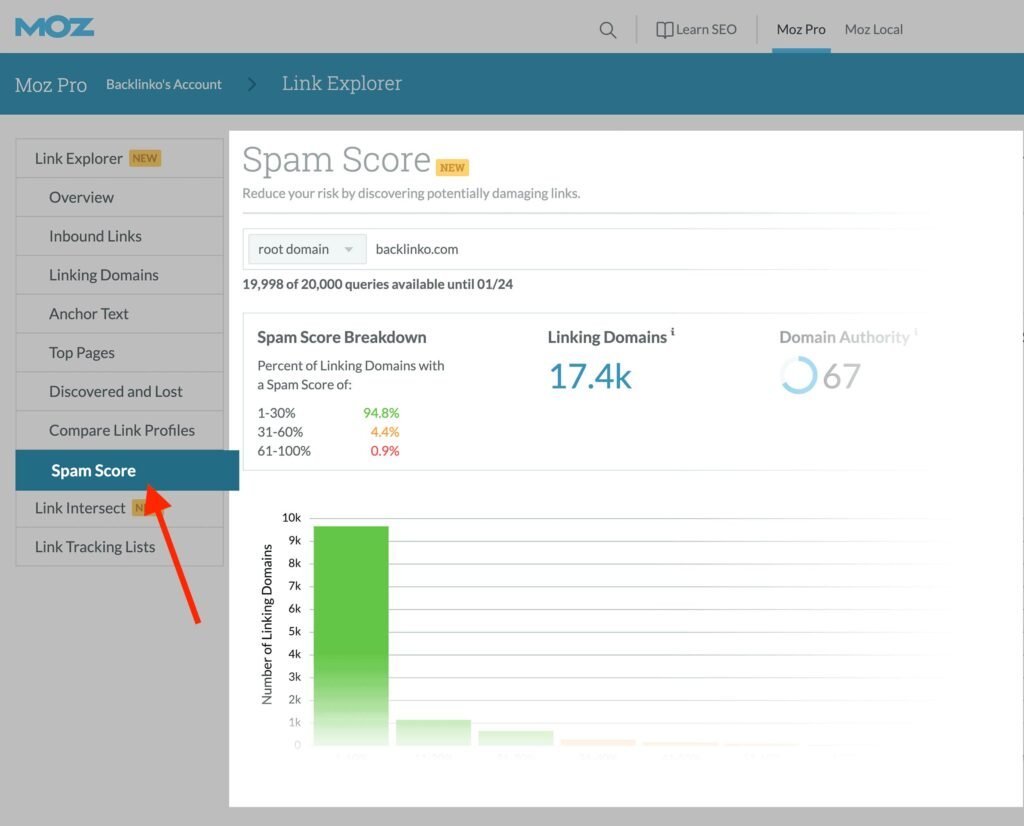
If you want to understand your website’s Spam Score, Moz Link Explorer is a useful starting point. It provides Moz’s original Spam Score metric along with backlink-related information.
Follow these steps to check it:
Step 1: Open Moz Link Explorer
Visit the official Moz website and navigate to its Link Explorer tool.
Step 2: Enter Your Website Domain
Enter your complete domain name or the specific website URL you want to analyse.
Step 3: Review the Website Overview
Once the report is generated, examine the available information, including Domain Authority, linking domains and inbound links.
Step 4: Open the Spam Score Report
Find the Spam Score section to view the website’s score and its available breakdown.
Step 5: Investigate Referring Domains
Review the websites linking to your domain. Pay attention to their content, relevance, linking patterns and anchor text.
You can also use other SEO platforms for backlink analysis. However, their metrics may have different definitions and should not be treated as identical to Moz Spam Score.
What Factors Can Contribute to a High Spam Score?
Moz uses 27 features to identify similarities between websites and previously penalised domains. These features do not represent 27 confirmed Google ranking factors or violations.
Some of the broader characteristics worth understanding include:
- Low number of pages: A website with very few discovered pages may share a characteristic with certain low-effort websites. However, a small website is not automatically spam.
- Domain characteristics: Certain domain extensions, unusual domain structures and lengthy domain names may appear among the characteristics identified by Moz.
- Website information: Missing contact details and limited business information can sometimes be associated with less trustworthy website patterns.
- Content characteristics: Thin, repetitive or poorly developed content may indicate a lack of useful information.
- Linking patterns: Unusual inbound and outbound link patterns can deserve further investigation.
- Anchor text distribution: Excessive use of commercial or keyword-heavy anchor text may indicate manipulative link-building practices.
It is important not to change legitimate website elements simply to satisfy a third-party metric. For example, adding unnecessary pages or external links just to influence Spam Score is not a meaningful SEO improvement.
How Does Spam Score Affect SEO?
A common misconception is that a high Spam Score directly lowers a website’s Google rankings. This is not correct.
Is Spam Score a Google ranking factor? No. Moz Spam Score is a proprietary third-party metric, and Google does not use its percentage as a direct ranking signal.
However, some activities associated with suspicious backlink profiles can violate Google’s spam policies.
For example, buying links to manipulate rankings, using automated link-building services, participating in excessive link exchanges and publishing low-value content primarily to generate backlinks can create SEO risks.
Google has its own systems for identifying these practices. Depending on the violation, it may ignore unnatural links or apply a manual action.
Therefore, how spam score affects SEO depends on the actual website issues behind the metric, not the percentage itself.
A website with a high score may continue performing well in organic search, while a website with a low score may still have problems that need attention.
How to Reduce Spam Score and Improve Your Website’s Link Profile?
Reducing Spam Score requires understanding the signals behind the result. Instead of removing backlinks randomly, focus on identifying genuine issues and maintaining a natural backlink profile.
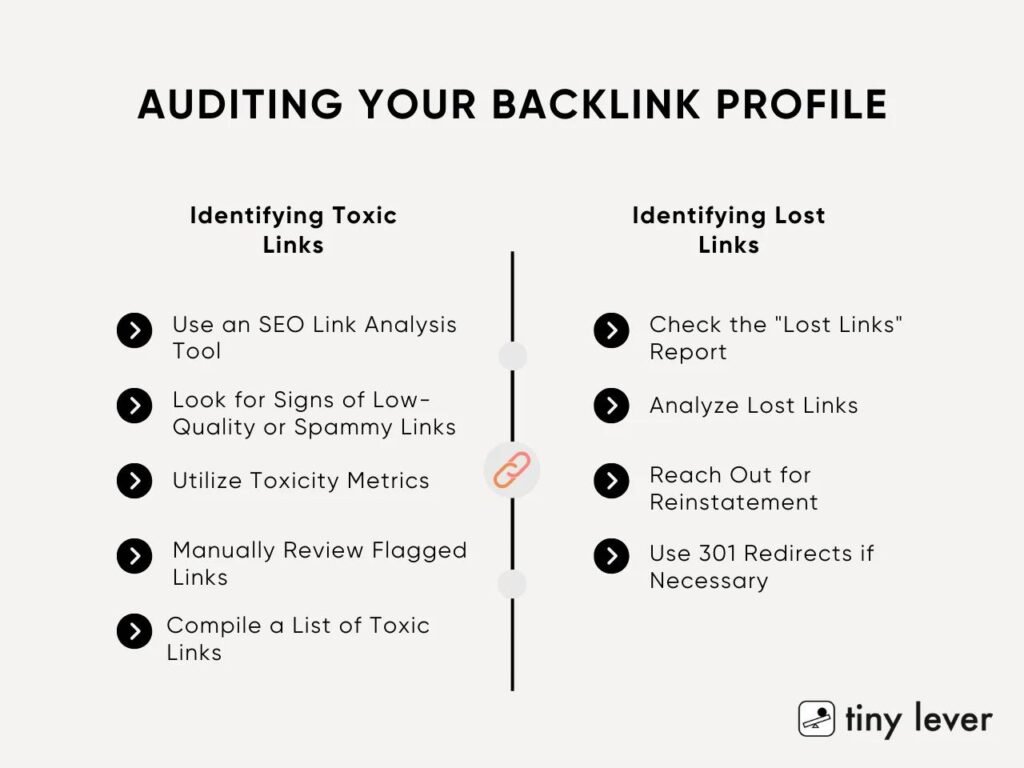
1. Conduct a Complete Backlink Audit
Start by collecting information about the websites linking to your domain.
Review the total number of referring domains, linking pages, anchor text distribution and the relevance of each website.
Look for unusual patterns, such as hundreds of links appearing within a short period or links coming from websites with unrelated content.
A backlink audit helps you understand which links deserve attention and which are simply normal parts of the web.
2. Identify Potentially Harmful Backlinks
Toxic backlinks and Spam Score are related concepts, but they are not interchangeable.
Third-party SEO tools may flag backlinks based on different signals, including suspicious domain characteristics, irrelevant content and unnatural linking patterns.
Before taking action, manually investigate the referring website.
For example, a genuine blog with limited authority may still provide a relevant editorial backlink. On the other hand, a website created primarily to publish automated links may deserve closer examination.
3. Remove Manipulative Links Where Possible
If your website has backlinks created through paid link schemes, automated services or other manipulative practices, investigate their source.
Where possible, contact the website owner and request removal of the unnatural links.
If links cannot be removed, Google’s Disavow Links tool may be relevant in specific circumstances, particularly when a website has a considerable number of artificial links and a manual action or a strong risk of one.
However, Google advises using this tool cautiously. Disavowing legitimate backlinks unnecessarily can affect your website’s search performance.
4. Improve Website Content Quality
Backlink quality is only one part of a website’s overall SEO health.
Review existing pages to identify thin content, duplicate information, keyword stuffing and pages that provide little value to visitors.
Publish useful information that addresses genuine search queries. Make sure each page has a clear purpose and provides something meaningful to its intended audience.
Avoid creating multiple pages simply to target slightly different keyword variations without offering additional value.
5. Focus on Relevant and Natural Link Building
Building a strong backlink profile requires more than increasing the total number of links.
Prioritise links from websites that are relevant to your industry, publish genuine content and provide meaningful context for linking to your pages.
Original research, useful resources, industry contributions and genuine editorial mentions can help attract natural backlinks.
Avoid automated link-building packages, excessive reciprocal linking and paid links intended to manipulate search rankings.
6. Monitor Your Website Through Search Console
Google Search Console provides important information about your website’s search performance and potential manual actions.
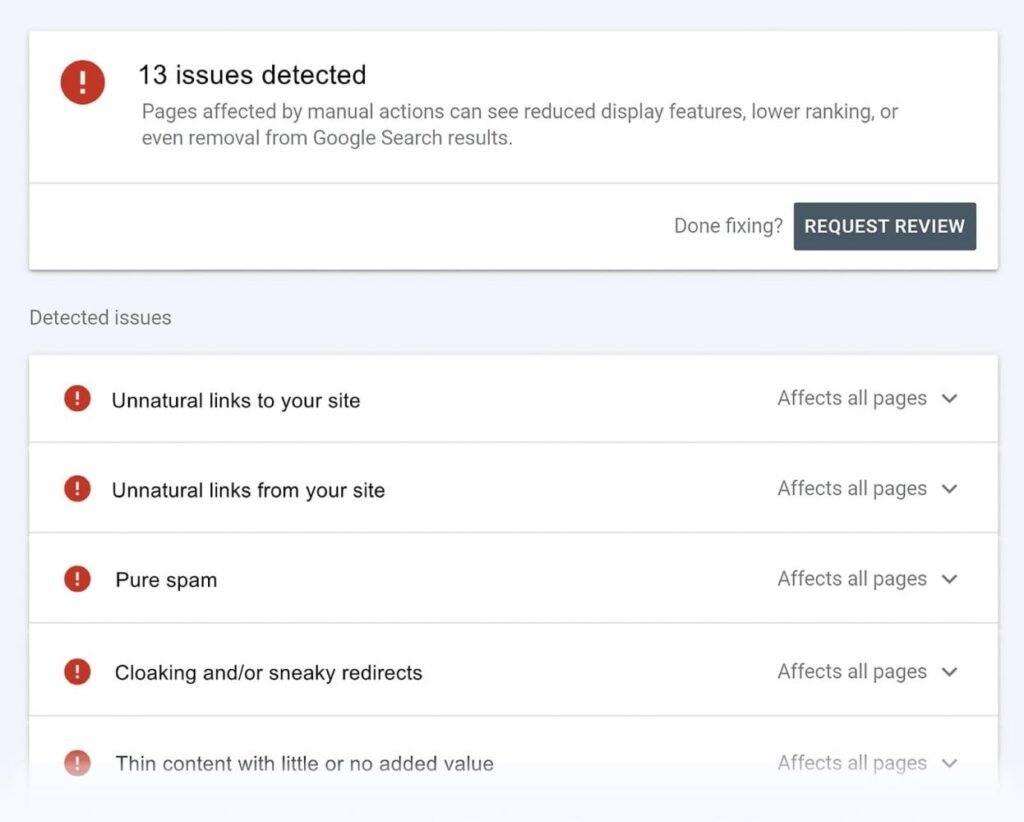
Check the Manual Actions report to identify whether Google has issued any manual action against your website.
Also review indexing reports, organic search performance and other available notifications.
If you notice a sudden decline in organic traffic, investigate possible causes instead of assuming that Spam Score is responsible.
What Should You Do If Your Website Has a High Spam Score or Google Penalty?
A high Spam Score and a Google manual action are two different situations. Understanding the difference helps determine the appropriate next step.
If your website has a high Spam Score, start by reviewing the Moz report and investigating the referring domains. Do not immediately remove or disavow every link marked as suspicious.
If Google has issued a manual action, open the Manual Actions report in Search Console and read the specific reason provided.
For an unnatural links action, review the backlinks, make reasonable efforts to remove links that violate Google’s policies, and use the disavow tool where appropriate. Once the issues have been addressed, submit a reconsideration request if the action requires one.
If there is no manual action, but organic traffic has declined, investigate other possible causes, including indexing problems, technical issues, content quality and changes in search demand.
A proper diagnosis is more useful than making changes based on a single SEO metric.
When Should You Consider Professional SEO Audit Services?
Identifying backlink issues, understanding Google penalties, and analysing website quality can sometimes require a deeper technical investigation. While basic SEO tools provide useful data, interpreting that information correctly is important before making any changes to your website.
An experienced SEO agency can help analyse backlink profiles, identify potentially harmful links, investigate manual actions, and evaluate technical issues that may affect organic search performance. A detailed SEO audit can also help uncover content-related problems, indexing issues, and unnatural linking patterns that may require attention.
The objective should be to identify the actual cause of the problem and develop an appropriate action plan rather than simply trying to reduce a third-party Spam Score.
Conclusion
Understanding SEO Spam Score is important for evaluating potential website quality concerns, but the percentage alone should never determine your SEO decisions.
Regular backlink audits, careful evaluation of referring domains, useful website content and compliance with Google’s spam policies are more meaningful ways to maintain a healthy online presence.
If your website has a high Spam Score, suspicious backlinks, a sudden decline in organic traffic or a Google manual action, a detailed website investigation can help identify the underlying issues.
Need help analysing your website’s Spam Score or resolving backlink and Google penalty-related concerns? Submit an inquiry through our website to discuss your website’s SEO issues and possible corrective steps.
Frequently Asked Questions:
A score between 1% and 30% falls within Moz’s low Spam Score category. However, this does not guarantee that every backlink is safe. Individual links and website characteristics should also be reviewed.
Yes. Moz evaluates similarities across multiple website characteristics, not just the quality of incoming backlinks. Therefore, a website can have a high score without necessarily having toxic backlinks.
No. Removing manipulative backlinks does not guarantee an immediate ranking improvement. The impact depends on the nature of the links, the website’s circumstances and Google’s evaluation of its search policies.
Checking it periodically, such as during monthly or quarterly SEO audits, can help monitor changes. More frequent reviews may be useful when investigating unusual backlink activity or a known link-building issue.
Both are metrics developed by Moz, but they measure different things. Domain Authority estimates a domain’s ranking potential using link-related data, whereas Spam Score measures similarities with websites identified as penalised or banned.
No. Google does not issue penalties based on Moz’s Spam Score. However, manipulative practices identified during a backlink investigation may violate Google’s spam policies and lead to search-related consequences.
Spam Score is Moz’s metric based on similarities with previously penalised websites. Toxicity Score is a separate metric used by Semrush to identify potentially harmful backlinks. Their calculations and evaluation methods are different.
No. A low score does not guarantee high rankings, strong organic traffic or a completely healthy website. Technical SEO, content relevance, user experience, indexing and backlink quality all need separate evaluation.
